There are some music terms I think about a lot because the idea of remix culture won’t go away, even in casual conversations.
Between reboots and rehashings of old ideas, people are caught up on what’s timeless, what’s timely, what’s evergreen, what’s not, and a million details in between.
"But Matt, EVERYTHING has been done before,” I’ve been told. And it’s true. But only in the same ways there are 12 notes and a bajillion songs, or more books than there are words in the English language, etc. etc. et. al. et. al.
This is a post about permission to create, with what you’ve got at your disposal.
I can only talk about this in terms I intimately understand, so if you’re not a music person, don’t worry because I’ll explain these words and their connective logic first, and then we can get into how to use them.
We’re talking about Originals vs Standards, Sampling vs. Chopping, and the squishy spaces in between.
Original: a song you came up with.
Standard: an original song that now everybody knows (for the jazz people, these are the songs from the Great American Songbook, for people who go to bars and see acoustic duos and wonder why they’re playing “Country Roads” - it’s because it’s a Standard)
It’s hard to get attention for your Originals. It’s hard to get respect if you only play Standards (re: covers). This is why the remix or a cover-with-a-twist is a popular idea. I won’t get into interpolations, but for the 3 music nerds who care, I’ll tuck that into this paragraph, too.
Frustrations with reboots and remix usually underappreciate how hard it is to get an Original heard.
The more Standards there are in the world, the higher the wall is to sneak a new Original into the mix.
Reboots and Remixes are therefore a viable strategy to get some of the benefits of the standards without taking the full risks of writing (and marketing) an Original.
However, that in-between space feels very full of Reboots and Remixes because it is.
The solution is more Originals.
Real ones. Originals that, whatever they Sample or source, are at least self-aware of what they’re literally or metaphorically Sampling. And I know somebody out there is reading this and thinking I mean AI slop, too, and I don’t (but also, I don’t care either because we can’t stop them). I’m saying the opportunity is to make the kind of Originals where you know exactly what and why you’re choosing to Sample, for us to hear.
Now, what us creative types can do, strangely enough, can be helped with some classic remix culture terms.
Sample: Extract one idea or element from someone else’s Original. It’s a snapshot - like a kickdrum or snare or vocal bit that you’ve decided is of interest.
Loop: Repeat something you’ve Sampled. It’s the Diana Deutsch speech-to-song concept (which, repeat “Sometimes behave so strangely” 10x in a row and marvel how it takes on a sing-songiness out of nowhere).
Chop: Take a Sample or Loop and rearrange its order or structure. Questlove famously told J Dilla that nobody could sample “Give It To Me Baby” by Rick James, so Dilla turned it into the foundation for Common’s “Dooinit.” Most people, me included, can’t recognize the Sample until it’s pointed out which is WILD.
How close is creating an Original work to high-quality Chopping to make a new song?
Very, very close.
There’s no “right way” to do it. There’s no “only way” to do it. There’s simply the reality that everything draws from something else, directly or indirectly, and part of the creative process - your creative process - is setting the permission level for how you want to work with which inspirations.
That’s supposed to sound liberating, by the way. There is no hierarchy. It’s ALL middle ground and that’s a beautiful thing.
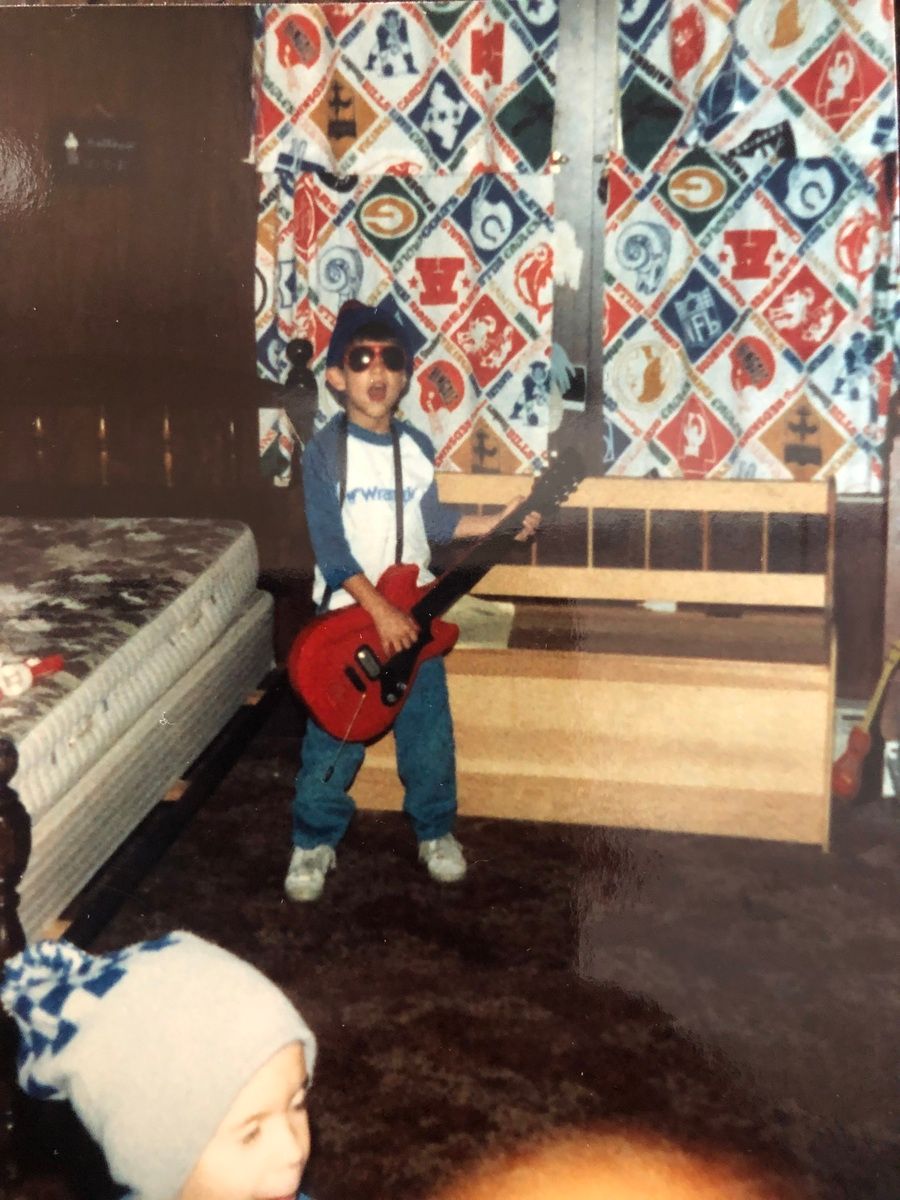
It’s in my bones. It’s in how I spent high school playing in original bands with my friends and a cover band with a bunch of older/professional musicians. One weird thing I figured out was how much easier it was to make a living off of playing Covers and Standards vs. Originals.
So I started playing around with a deeper idea in my Original bands as a teenager. By the time I got to college, I was fully obsessed with making music that could effectively trick people who would come out to hear Standards into liking Originals.
I wish I could tell you it was a cool thing and I didn't think all that hard about it. But I was obsessed with this problem. And as I'm writing this, I'm realizing I still am.
And it’s not like I hate this barrier. I’m completely and utterly fascinated by it, and I’ve tasted what it feels like to punch through it, where you get people to like something new because they weren’t expecting it, and then after they thank you for it by saying, “Hey, that thing you’re doing was really cool!”
I’d be lying if I didn’t admit it feels harder than ever. But, as De La once said over a Dilla beat, “Stakes is high.”
I am still trying to tell others this is possible.
You can find your own metaphorical native tongue, or Native Tongues (!), and make a message your people will receive.
The oppressive feeling that everything has been done and AI is making better than average quality in more quantity than ever, so why bother is practically forcing this fight out of me, harder than figuring out a way to come up with rent money without playing awful Covers.
I share this because I know how easy it is to be frustrated by the vaunted walls around the Standards in every industry from music, to literature, to - stuff like podcasts. I see all the levels, too.
The frustration, however? From where I sit, and from experience, it’s almost always misplaced.
You have permission to create.
A-l-w-a-y-s.
It can be an Original. It might become a Standard. It might not. It might be an Original work of Standard Samples that you’ve Looped and Chopped into a Dilla-esque masterpiece of your own, or - maybe you’re the person who originates a whole new creative experience nobody’s even dreamt up before.
Take all the restrictions off of the table.
Just go make.
The world already possesses the inputs, you’ve got permission to organize them however you want into some creative output.
ps. You know them stakes is high. Reinstate the Native Tongues, in all the ways…
