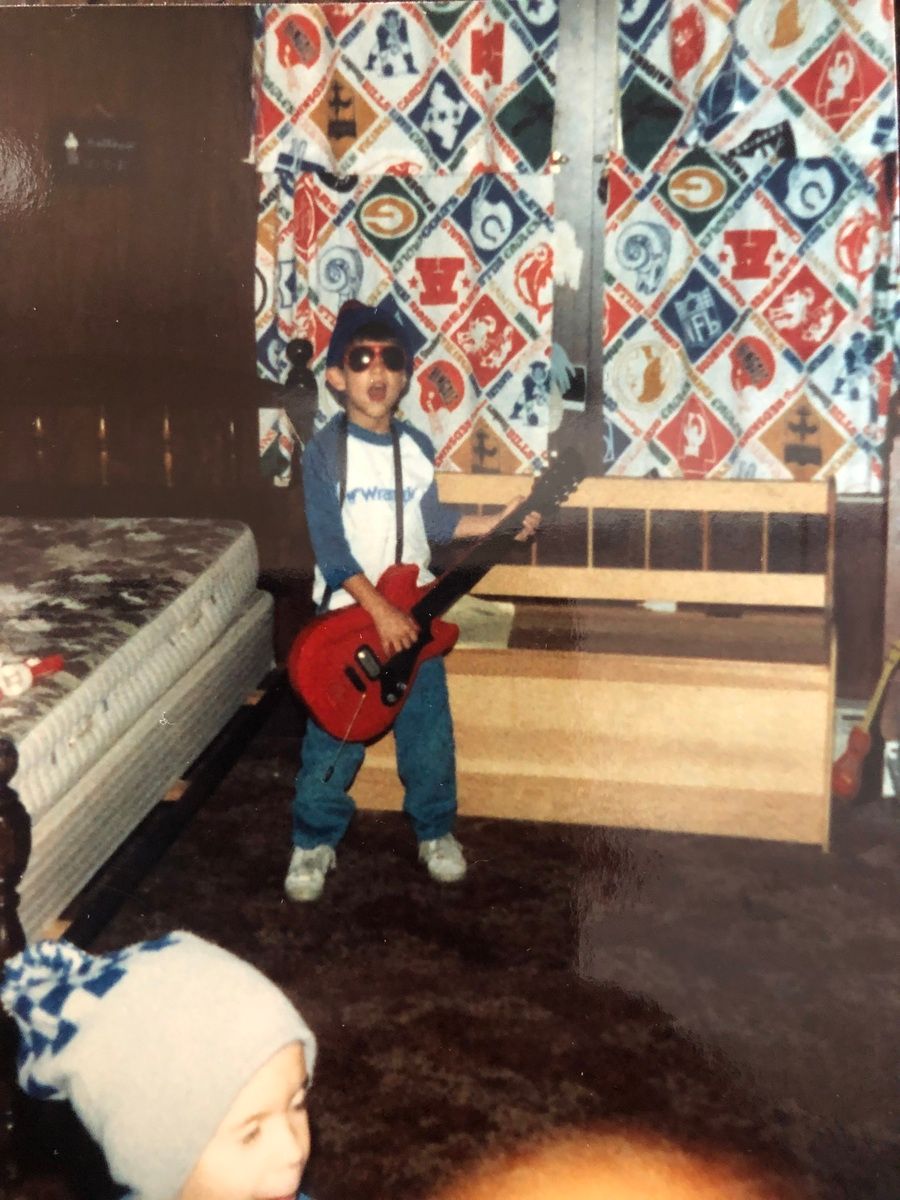
For years, I've been connecting with interesting people and documenting insights that might help my clients and myself. What was once private is now (mostly) public.
People often ask: "How do you know all these people?" and "How do you connect these (re: random) ideas?" The answer is simple: consistent relationship cultivation and thoughtful note taking. My north star is trusting my instincts, my maps are the constellations in these reflections.
This approach to multidisciplinary networking has helped dozens of clients, colleagues, and friends strengthen their networks and unlock new opportunities. Feel free to steal these ideas directly - that's what they're for! I can't promise you'll learn FROM me, but I guarantee you can learn something WITH me. Let's go. Count it off: 1-2-3-4!
Introducing... Bronwyn Williams!
Do you know Bronwyn Williams? She's a futurist, economist, and trends analyst based in Johannesburg, South Africa - one of those rare people who can read a civilization the way a scientist reads a data set, and then tell you exactly what the numbers mean in plain, unflinching language.
If not, allow me to introduce you. Bronwyn is a partner at Flux Trends, where she works at the intersection of economics, behavioral science, and scenario planning. She's the kind of thinker who gets invited to keynote stages around the world - and then says things the audience didn't necessarily want to hear.
I wanted to connect with her because she embodies something I value deeply: the willingness to tell the truth about the future before it arrives, even when the room isn't ready for it.
Our conversation is LIVE now on the Just Press Record YouTube channel (and this Cultish Creative Playlist). Listen and you'll hear Bronwyn and fellow guest Michael Kinch - a biotech innovator and Chief Innovation Officer at Stony Brook University - collide on vaccines, behavioral economics, South Africa as a living laboratory, and what it actually means to hold a strong opinion in a world that keeps rewarding weak ones.
THREE: That's The Magic Number of Lessons
In the meantime, I wanted to pull THREE KEY LESSONS from my time with Bronwyn Williams to share with you (and drop into my Personal Archive).
Read on and you'll find a quote with a lesson and a reflection you can Take to work with you, Bring home with you, and Leave behind with your legacy.
WORK: Know The Difference Between Changing The Frame And Pulling The Lever
"The big breakthrough with behavioral economics and the nudge stuff - the idea was that by changing the way you put information to someone, you can change the decision they make, by playing into some of our psychological biases. The way we say things, that linguistic way of framing things, the information we choose to share, does have a quantifiable effect on how people make decisions. Now, of course, just like most things when it comes to freedom, that's great if everybody understands how that works, but if you know how that bias works and the person you're trying it on does not, then you are exerting power."
Key Concept: Bronwyn's distinction is between two different kinds of influence. Changing the frame - how information is sequenced, framed, or presented - works with how people already think. Changing the incentive - reward and punishment - works on them. The difference matters most when one party understands the mechanism and the other doesn't. That asymmetry is where influence becomes coercion.
Personal Archive Note-To-Self: There are so many systems in our lives that are focused on changing the incentives in front of our noses. Work, school, sometimes even people in our families - it's simple and obvious to explain it this way, but Bronwyn gets bonus points for explaining the frame-changing side by side with the incentive-changing.
You can’t help but see it in your life, right? I think about school, first. About the times you’re trying to pass the test (incentive) versus actually learning something (frame). Or how many times I've met people - and still meet people - who are on paper brilliant (incentive) but frustrated because they don't know what to do with it in the world (framing).
I mean - I'm a friggin' failed/ex-music person who took on a finance/business career and I promise you it's not because I barely scraped by learning fractions in 4th grade. It's all about letting the incentive structure go and focusing on the framing - or reframing, in this case, to live like you wanna live. Plus, I can do some math - yay!
When somebody holds information over your head and exerts influence to get what they want out of you in a transactional way, you just want to be able to see their incentive baiting for what it is. The larger scale framing of the issue is what helps us see it. And when you can do that for others - and yourself - the world becomes way less transactional and way more relational.
Work question for you: In your last difficult conversation - a pitch, a negotiation, a performance review - were you changing the frame or pulling a lever? And did the other person know the difference?
LIFE: Privilege Isn't A Crime. Wasting It Might Be.
"I'm not someone who thinks that you need to be embarrassed of your privilege, but I think you need to be aware of it. And being a white person with a British passport living in Africa through the transition of apartheid, I'm aware of that consciously all the time. Many people would see privilege as something to be kind of torn down. But on the other side, it's a responsibility. Because a weird thing about privilege is it's not transferable. You can only either use it for your own ends or for better ends, or lose it."
Key Concept: Bronwyn's argument is that privilege isn't a moral verdict - it's a resource with a limited set of outcomes. You use it for yourself, you use it for others, or you lose it. What you can't do is pass it on. That framing removes the guilt and replaces it with a more direct question: what are you actually doing with what you have.
Personal Archive Note-To-Self: I don't play cards, but if I did, I'd be really fond of using this metaphor with confidence: you should always be present enough to center yourself on the question - what are the cards in your hand, right now?
Everybody has to deal with what they're working with. There's no fair or level-setting that you can control on a massive scale. Sometimes we can change how the cards get dealt, but even in those rare circumstances, we still have to start with the hands we’ve got.
In the comic books, the people who demand they control the dealing are the supervillains for a reason. Don’t be a supervillain. Instead, recognize how we all have choices to make with the cards we've already been dealt and that all the murky unfairness that comes with where we stand right here and right now can create some positive outcomes.
It's no fun to admit how hard that’s going to be for some. It's terrifying to think about the inhumane ways humans have handled it across history. But we all have a hand we can play and if we stay in the game we might be able to exert some positive influence on our fellow players.
When we zoom out and try to think this way - and if we consider that playing the game is more fun than ending the game, by winning or losing or quitting - it might help change our approach. Because another hand is going to get dealt, and wouldn't you rather be having fun with the other players than thinking, "Oh no, they're going to get me back, aren't they?"
Life question for you: What's one form of access, advantage, or credibility you carry that you haven't fully deployed - for yourself or for someone else?
LEGACY: Hang Onto Your Strong Opinions Until The Facts Pry Them Loose
"I have strong opinions weakly held - what? Are you stupid? Or are you dumb? Why do you have a strong opinion about something you're not sure of? If you have a strong opinion about something, you better be damn sure you are right. You better hang onto that tooth and nail until the facts claw that bare mistake out of your hands. I'm a big believer in strong opinions, strongly held and weak opinions, keeping them weak."
Key Concept: Bronwyn's objection is to a specific kind of intellectual hedging - claiming strong opinions while leaving yourself an exit. Her version of the standard is simpler: the strength of your opinion should match the work you've put into it. Weak opinions stay weak and tentative. Strong ones get defended until the evidence forces a change, not until the room gets uncomfortable.
Personal Archive Note-To-Self: The expression is so overused in finance that even saying "strong opinions strongly held" feels like I'm breaking some kind of rule. But she's right. And it's worth breaking.
Sooner or later you have to have some conviction. One of the hardest parts about conviction - to call back something Mike said in our conversation - is having the humility to know you're mostly wrong most of the time. But in those moments where you know in your core you're likely to be right, that's when you have to plant the flag.
Yes, in all the big life ways, but also in the smaller, more human ways. I think about art. I think about writing. I think about creative pursuits. It's those little choices. It's the idea that when you're an active participant, you get to do the action. You aren't critiquing, you're expressing - and that means it's all up to you.
On one hand it's scary, but on the other - isn't it liberating? And if you hold on strongly to those views, maybe it won't work out, but you'll always learn something. This is an expression I want young people, creative people, and ALL people to know. So long as they don't forget the humility and kindness stuff too, because we are playing a game where we want to keep as many other players at the table as we can - but it's so important to have belief in your ideas and your intuitions.
Legacy question for you: What's one belief you hold strongly that you've actually stress-tested - and one you've been calling a strong opinion that you haven't?
BEFORE YOU GO: Be sure to…
Explore her work at Flux Trends and her personal site What The Future Now
Watch the full conversation with Bronwyn and Michael Kinch on the Just Press Record playlist
Take a moment to reflect on all these ideas!
You have a Personal Network and a Personal Archive just waiting for you to build them up stronger. Look at your work, look at your life, and look at your legacy - and then, start small in each category. Today it's one person and one reflection. Tomorrow? Who knows what connections you'll create.
Don't forget to click reply/click here and tell me who you're adding to your network and why! Plus, if you already have your own Personal Archive too, let me know, I'm creating a database.
Want more? Find my Personal Archive on CultishCreative.com, watch me build a better Personal Network on the Cultish Creative YouTube channel, and listen to Just Press Record on Spotify or Apple Podcasts, and follow me on social media (LinkedIn and X) - now distributed by Epsilon Theory.
You can also check out my work as Managing Director at Sunpointe, as a host on top investment YouTube channel Excess Returns, and as Senior Editor at Perscient.
ps. AI helped me pull and organize quotes from the transcript, structure the three lessons, and sharpen the Key Concepts. If you're curious about how I use AI while keeping editorial control and my own voice intact, I wrote about my personal rules here: Did AI Do That: Personal Rules
