For years, I've been connecting with interesting people and documenting insights that might help my clients and myself. What was once private is now (mostly) public.
People often ask: "How do you know all these people?" and "How do you connect these (re: random) ideas?" The answer is simple: consistent relationship cultivation and thoughtful note taking. My north star is trusting my instincts, my maps are the constellations in these reflections.
This approach to multidisciplinary networking has helped dozens of clients, colleagues, and friends strengthen their networks and unlock new opportunities. Feel free to steal these ideas directly - that's what they're for! I can't promise you'll learn FROM me, but I guarantee you can learn something WITH me. Let's go. Count it off: 1-2-3-4!
Introducing... Dave Nadig!
Do you know Dave Nadig? He's an independent ETF expert and financial futurist with over 30 years in investment management and the ETF industry - former CEO of ETF.com, longtime industry pioneer, and one of the sharper minds you'll find thinking about where markets, technology, and human behavior intersect.
If not, allow me to introduce you. Dave has built a career at the edge of finance and ideas - from running ETF.com to publishing his own analysis and commentary at Nadig.com. He's the kind of person who shows up at conferences, on stages, and in conversations and makes you feel like you've been thinking about things the wrong way.
I wanted to connect with Dave because he's someone who has clearly done the work of learning how to communicate - and has thought deeply about why most people haven't.
This is a special Oh Snap, Guess What I Saw episode of Just Press Record, LIVE now on the Cultish Creative YouTube channel (and this Cultish Creative Playlist). We watched a clip from a prior Just Press Record episode featuring Kate Bradley Chernis - generative AI pioneer, former SiriusXM rock radio DJ, and cofounder of The Backline Network - and Dave couldn't stop riffing. Listen and you'll hear two people who love radio, oral storytelling, and the intentional use of voice unpack why the human voice might be the last irreplaceable thing.
THREE: That's The Magic Number of Lessons
In the meantime, I wanted to pull THREE KEY LESSONS from my time with Dave Nadig to share with you (and drop into my Personal Archive).
Read on and you'll find a quote with a lesson and a reflection you can Take to work with you, Bring home with you, and Leave behind with your legacy.
WORK: The Cadence Of Getting Through
"I used to train... Anybody who worked for me had to go through media training. It was just rote. All the analysts who came through etf.com in the early days, we tried to send everybody to do at least a day of media training, and I think it's incredibly valuable, not just because it teaches you those skills of what not to say and how not to get in trouble, but because it teaches you that things like how quickly you speak, and the cadence with which you speak, and the choice of the words you use make a real difference in how your message is received, and that seems to be lost."
Key Concept: Most professionals think about what they say. Fewer think about how they say it - the speed, the cadence, the specific word choices that determine whether a message lands or gets lost. Dave built media training into his culture at ETF.com not as a PR exercise but as a communication craft requirement. The insight is that delivery isn't separate from content - it is the content, as far as your audience is concerned.
Personal Archive Note-To-Self: Staying meta aware of how you’re communicating what you’re communicating is so weird and hard to start practicing it’s not even funny. I’m 3ish years into regularly podcasting and I’m still struggling with it. Just last week I put a “No Like” reminder on my computer screen because I replayed something with myself speaking for reference and I sounded like a valley girl.
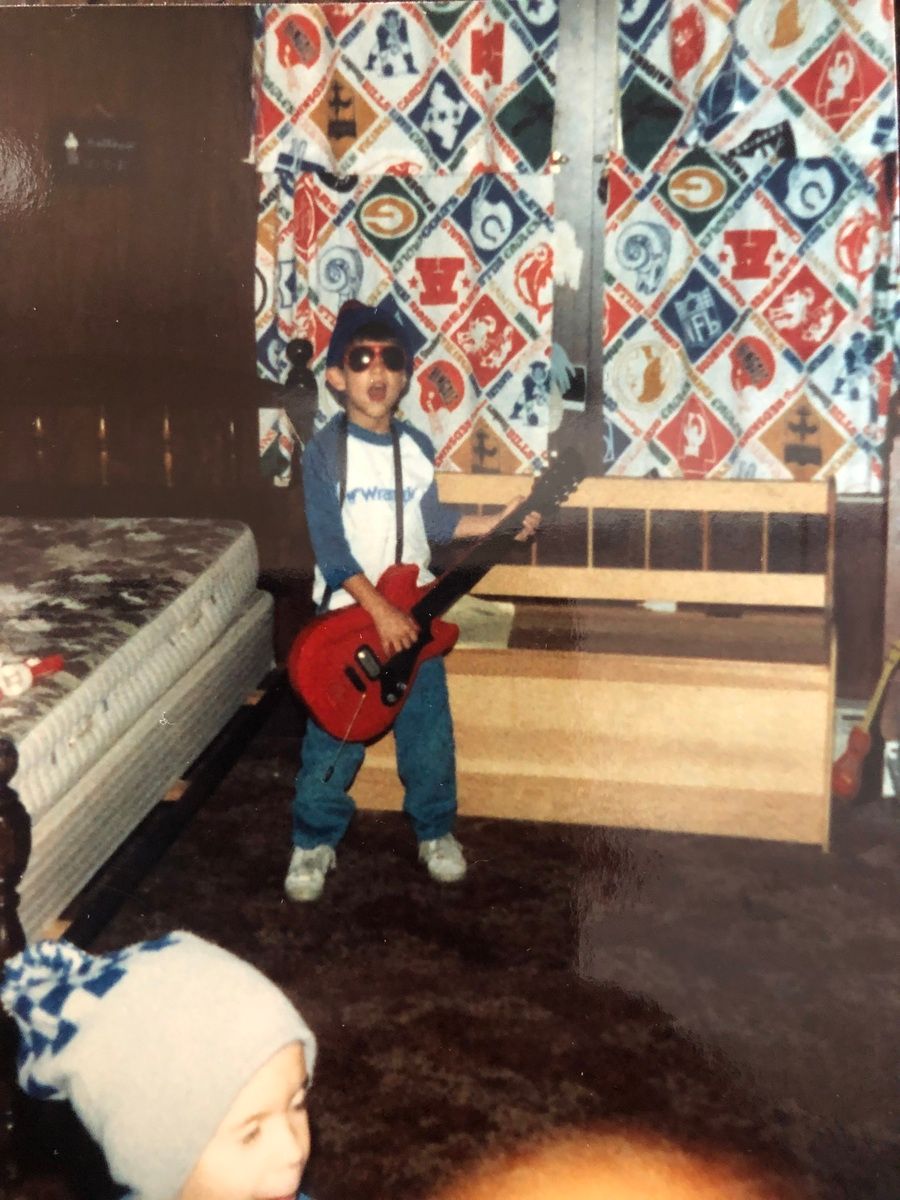
The closest thing I can compare this to is some musical performance advice I got a long time ago. It was the simple reminder to record yourself, especially on gigs, and force yourself to listen later. The idea was, we spend so much time listening to the greats play, that we have to force ourselves to hear our not great selves to understand what needs more work that we might not otherwise notice.
You don’t learn this from one teacher over one session. It’s a practice and a habit. Dave’s so good at it and it’s one of my favorite reasons to collaborate with him. I watch him do this in awe, every time we do a Click Beta or whatever else, and I can only hope in 30 years of reps I can be at that level, too.
Work question for you: When did you last get real feedback - not just on what you said, but on how you said it?
LIFE: The Wall Really Dropped
"You could tell that they'd all sort of forgotten they were recording something, and we were now literally just sitting around the kitchen table in their house in Huntington... And there was that, the wall really dropped - because it was these three brothers just taking the piss out of each other. Like, with old jokes that went back to the '80s or something like that. And their dad was on the show too, and it was one of those moments where I was like, 'Oh, this format has got legs.' This whole podcasting thing is legit. Because it was just an utterly unique sense of being in a family of people who are hilarious, you know? And that is really infectious."
Key Concept: Dave's convert moment for podcasting wasn't a polished show - it was a lo-fi comedy podcast where the performers forgot the mic was on. That forgetting is the thing. When the wall drops between performer and audience, something genuine passes through that no amount of production value can manufacture. Dave recognized it immediately, and it changed how he understood the medium.
Personal Archive Note-To-Self: When I think about my relationship in consuming and creating podcasts today, I can’t help but go back to skateboarding videos. For the uninitiated, in the 80s and 90s, skateboarders would take a video camera and edit together footage of themselves doing tricks and routines. There’s nothing earth shattering there, except that they’d get passed around, which gave them a cool word of mouth sharing component.
But sometime in the late 90s, a group of skaters in PA started putting a ton of sketches into their videos. The overall format was skating, but between the comedy and pre-YouTube absurdity that ensued, here you had a group of friends you could watch interacting, and it was crack. My friends and I watched them together a million of times.
YouTube, podcasts, and everything that’s followed makes me think of CKY/Landspeed and that moment. It is a foundational example of how eavesdropping on interesting and entertaining people is inescapable for other humans. Our curiosity just can’t help itself.
Life question for you: Think about a moment when a wall dropped - in a conversation, a room, a relationship. What made it drop, and what became possible because of it?
LEGACY: Whose Voice Is It, Really?
"I did a speech for a cabinet secretary back 20-something odd years ago, which I agonized over for a month. I had all these tapes of this person speaking and learned how they breathed, how long their sentences could go before they would get out of breath, and then I wrote something based on the ideas, that they want, that sounded like them, that made it really good when they delivered it... But also that always felt really weird and inauthentic. Despite the fact that I made a living speech writing... when you see somebody do that and then they nail it and they deliver it, there's a part of you that's sort of like, well, that's kind of fake. 'Cause it wasn't really their words, it was a speech writer's words."
Key Concept: Dave spent a month learning how a cabinet secretary breathed so he could write sentences the right length for their lungs. He was extraordinarily good at inhabiting someone else's voice - and never fully made peace with it. The legacy question underneath this story is quiet but persistent: when your words come out of someone else's mouth, or someone else's words come out of yours, what exactly got communicated, and by whom?
Personal Archive Note-To-Self: The ghostwriter conundrum is usually framed around credit. The jaded ghostwriter thinks they’re actually that good and they want the credit and the shot. But this part Dave adds on, that it’s about authenticity, is a hook that extends into every field.
We want to be us. We can help others be them. There’s a business and noble calling to that. But what is it about just being ourselves, too?
I think of all the ghostwriters who go on to write their own books, or especially in music, the top-liners and arrangers who strike out on their own. I think about how they rarely achieve the success of the stars they’ve previously worked for. Usually I get hung up on how that’s not fair. But talking to Dave about it, the authentic awareness they receive in giving it that shot, it counts.
It’s good to practice in the style of others. It’s great to perform in a realized style of your own. It can’t all happen at once and it takes reps. But if the highest calling is to deliver on the truest expression of yourself you can attain, this is where it’s at.
Legacy question for you: Where in your life are you delivering someone else's script - and where is the voice genuinely yours?
BEFORE YOU GO: Be sure to…
Connect with Dave Nadig on LinkedIn and follow him on X
If the Kate Bradley Chernis clip got your attention, look her up on LinkedIn and check out The Backline Network - her new venture at the intersection of human chemistry, creativity, and generative AI
Take a moment to reflect on all these ideas!
You have a Personal Network and a Personal Archive just waiting for you to build them up stronger. Look at your work, look at your life, and look at your legacy - and then, start small in each category. Today it's one person and one reflection. Tomorrow? Who knows what connections you'll create.
Don't forget to click reply/click here and tell me who you're adding to your network and why! Plus, if you already have your own Personal Archive too, let me know, I'm creating a database.
Want more? Find my Personal Archive on CultishCreative.com, watch me build a better Personal Network on the Cultish Creative YouTube channel, and listen to Just Press Record on Spotify or Apple Podcasts, and follow me on social media (LinkedIn and X) - now distributed by Epsilon Theory.
You can also check out my work as Managing Director at Sunpointe, as a host on top investment YouTube channel Excess Returns, and as Senior Editor at Perscient.
ps. AI helped me pull and organize quotes from the transcript, structure the three lessons, and sharpen the Key Concepts. If you're curious about how I use AI while keeping editorial control and my own voice intact, I wrote about my personal rules here: Did AI Do That: Personal Rules
