For years, I've been connecting with interesting people and documenting insights that might help my clients and myself. What was once private is now (mostly) public.
People often ask: "How do you know all these people?" and "How do you connect these (re: random) ideas?" The answer is simple: consistent relationship cultivation and thoughtful note taking. My north star is trusting my instincts, my maps are the constellations in these reflections.
This approach to multidisciplinary networking has helped dozens of clients, colleagues, and friends strengthen their networks and unlock new opportunities. Feel free to steal these ideas directly - that's what they're for! I can't promise you'll learn FROM me, but I guarantee you can learn something WITH me. Let's go. Count it off: 1-2-3-4!
Introducing... Ritavan!
Do you know Ritavan? He's an entrepreneur, investor, speaker, and author of Data Impact - a book that challenges how we think about data-driven value creation. But that descriptor doesn't capture who he really is: a mathematician trained at one of France's most elite institutes, a former commodities trader in Berlin, a CTO of a real estate tech startup, and someone who builds his life around one fundamental principle - treating every individual as exactly that: an individual, not a category.
If not, allow me to introduce you. Ritavan carries forward a multi-generational legacy of social reform that began with his grandfather dropping his last name as an act of idealism. He's spent years building products, trading markets, and now writing books - but underneath it all, he's asking the same question his grandfather asked: how do we create systems and spaces where people can show up as their full selves?
I wanted to connect with him because he embodies something I deeply value: the refusal to accept inherited limitations while staying grounded in deeper purpose.
Our conversation is LIVE now on the Epsilon Theory and Cultish Creative YouTube channels. Listen and you'll hear stories about riding horses across Indian villages, proving skeptical teachers wrong through pure spite, finding mentors on Twitter as a teenager, and what happens when you realize spite gets you started but something much deeper has to keep you going.
THREE: That's The Magic Number of Lessons
In the meantime, I wanted to pull THREE KEY LESSONS from my time with Ritavan to share with you (and drop into my Personal Archive).
Read on and you'll find a quote with a lesson and a reflection you can Take to work with you, Bring home with you, and Leave behind with your legacy.
WORK: Spite Gets You Started - But Only Something Deeper Keeps You Going
"Spite definitely gets you started, right? That's a poor moment decision. But spite is not a very deep or uplifting emotion. You start with that and then hopefully you discover something that keeps you going, because you need a much deeper fulfillment to go on that path. You cannot do it with just spite - if you do, it'll destroy you. Even when you win, you're still full of hatred. How is that solving anything? You have to tap into something much deeper."
Key Concept: Ritavan learned this the hard way. A math teacher told him he wasn't cut out for mathematics, and that rejection ignited something - spite, pure and simple. He spent years chasing that feeling, proving her wrong, eventually landing at one of France's most elite mathematics institutes on a full scholarship. But sitting in that program, surrounded by students who'd been prepped for years, he realized spite had gotten him through the door. It couldn't carry him through the work. The real fuel came later - when he discovered the beauty of rigorous thinking, the satisfaction of discovery, the joy of mentors who believed in him when he didn't believe in himself. Spite is a spark. Fulfillment is the fire that actually burns.
Personal Archive Note-To-Self: Change and progress always start with some sort of motivation. There’s the fun kinds of motivation, like realizing some person can do something that you wish you could do, so you get inspired and you try. I’m big on this type. A lot of my life has been spent chasing inspired motivation to do something at least as well as somebody else I saw doing something cool.
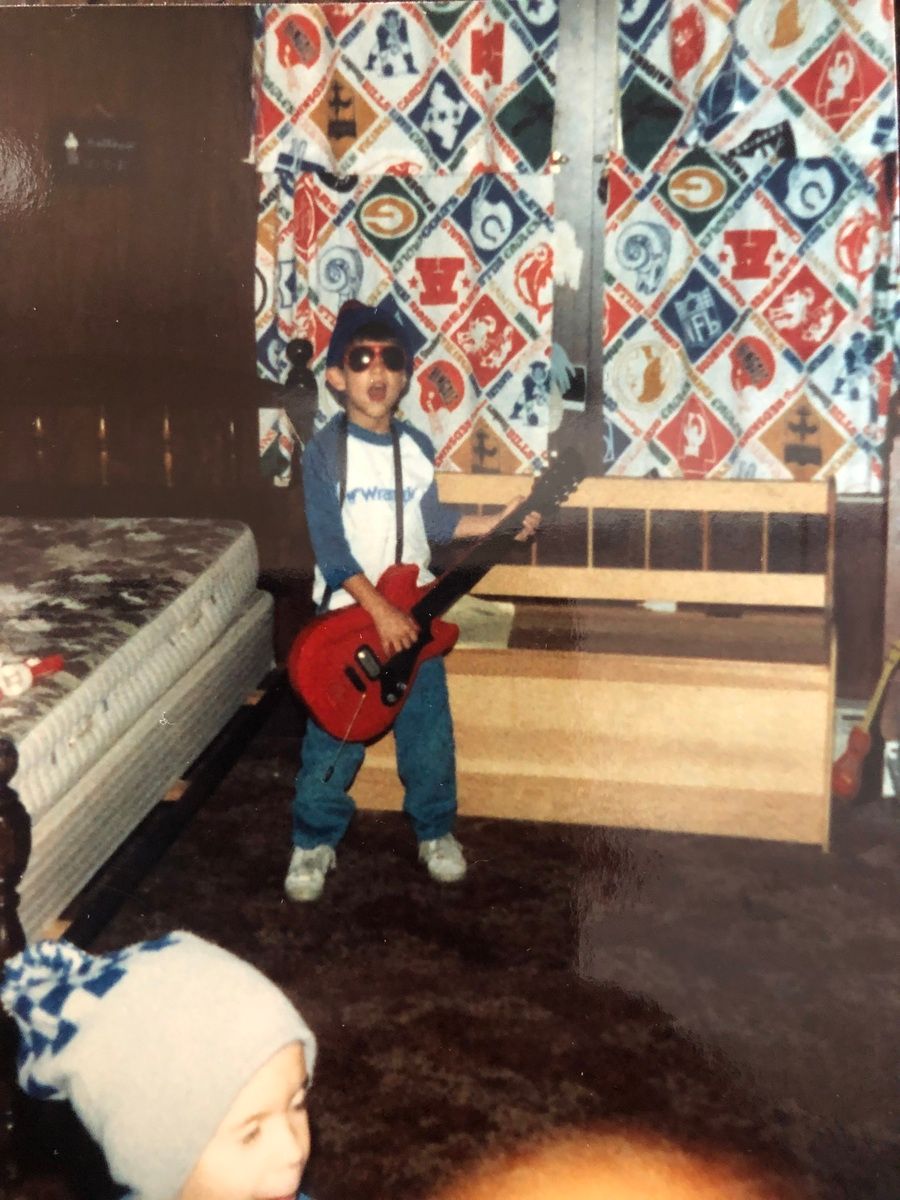
But positive-inspiration isn’t the only source. Sometimes you get put down. Sometimes somebody says, “No,” or “We can, but you can’t,” or “This just isn’t for you.” Oh, that gets me fired up. If motivation was enough to put me in a room with a guitar, practicing for hours, I still remember getting shot down for a gig I was trying to book for the band my friends and I had back in high school, when the promoter laughed at me over the phone and mocked me. Oh, did I hang up that phone and swear to prove that guy wrong. Yes, also to practice more, but mostly to make sure if I ever spoke with him again, that he’d eat those words.
Spite is a spark. In Ritavan’s story, his willingness to use any motivation as a source of energy speaks to where he is today. And, maybe most important of all, recognizing you can’t exclusively run on one source of motivation is the real key here. What starts you and what sustains you might be two totally different things, and that’s a good thing.
Positive change takes energy. Source it wisely.
Work question for you: What got you started on your current path - and is that still what's keeping you going?
LIFE: Blood Relations Are the Weakest Form of Family
"I think blood relations are the most obvious, but also one of the weakest forms of family and relationship. I think things go so much deeper. But you have to experience it. I think you have to have the trust, the openness to try it out, and then you just discover amazing stuff. Just before [my grandfather] passed away of Parkinson's, he told my mom about one of his best friends, and he said, 'When I'm gone, you know, he will be me for you.' I think it was really very profound. No blood relations."
Key Concept: Ritavan never met his biological grandfather - he died two years before Ritavan was born. Instead, he grew up around the friends his grandfather had made at an elite boarding school decades earlier, people who'd traveled across the Indian subcontinent with him, who'd stood beside him through decades of medicine and heartbreak. One of these men became his proxy grandfather, so deeply woven into the family that at the end of his life, Ritavan's grandfather told his daughter: "When I'm gone, he will be me for you." There was no DNA involved. Only presence, time, and the choice to show up for someone across decades. That's family.
Personal Archive Note-To-Self: Some people leave an impression on others, on the community and friends they keep, and it shows in stories like this. When I hear about the loneliness epidemic, or when I worry about people befriending AI chat bots instead of real people, I want to be reminded of stories like this. What Ritavan is saying is that love transcends blood, but only if it’s real.
Maybe this is part of why I resist workplace claims of family and belonging. The love isn’t ever really there (or, at least, the places I’ve worked where they said that, it was way more culty and way less “aww they really mean it!”).
If you do mean it, it shows up in your actions. I don’t exactly what Ritavan’s grandfather did, although from his stories we can get a pretty strong sense - the guy was remarkable, but maybe most powerfully, to have friends who would act as proxy grandparents in his absence, and then have it actually happen, is remarkable.
A sign of a life well lived is showing you’re so well loved you have people you would do something like this, and they’d do something like this for you. I’m aiming for that in my own life. As my Pop-Pop would say, it’s “beeyooteeful.”
Life Question For You: Who in your life has become family through choice rather than biology - and have you told them?
LEGACY: One Name, Three Generations of Idealism
"My grandfather was part of a social reform movement... and the profession got tied with the community, the ethnicity, the religion, and all of that. And that makes discrimination quite easy... So several people in this generation who just dropped their last name, um, sort of with the idealism that you treat every individual, every human being as an individual and not as part of a community, so you don't discriminate against them. And I still believe in that idealism, and so I'm sticking it out with one name."
Key Concept: In colonial India, last names became tools of control - they tied people to communities, religions, professions, making discrimination systematic and easy. Ritavan's grandfather looked at that system and decided to drop his last name entirely, refusing to be sorted into a category. It was an act of radical individualism rooted in compassion. His mother kept the practice. Ritavan continues it. Three generations have chosen to be known simply as themselves - not as members of a tribe, not as representatives of a profession or a place, but as individuals. In a world that constantly tries to sort us, that's a quiet act of defiance.
Personal Archive Note-To-Self: It’s so easy to forget the old stories. And it’s not our fault. They get abstracted away over time. It’s hard to put yourself in the mental place of other eras. But, it doesn’t mean we can’t try.
I’m envious of Ritavan’s single name story. Not because he’s like Madonna or any of the others I poked fun at him with in the intro. But because of that story behind it, and that he knows it.
Life is about the stories we pass on and pass down. Isn’t that what making art’s all about? You want to be remembered. You want to describe this human experience in some other medium so people can take it in and go, “Yeah, that’s it.”
When I think about all the hours practicing guitar, or the spite-booking I got launched on almost 30 years ago, or what any of the things I’ve ever been in pursuit of have amounted to, they all trace back to stories. They are rooted in stories I’ve been told, stories I’ve told myself, and stories I hope one day are told about me, even though I know nothing lasts forever.
The act of reflecting for our fellow human, to capture some shred of our existence and present it so they look at it and say, “Yeah, that’s it” too, is really important. Maybe not more important than money in the moment, but far more important than money over time. The fact that Ritavan’s inheritance is bearing the single name his grandfather once fought for out of protest - I hope that can be passed down in some way.
And whatever happens with that, I know he’s got me motivated. Here I am retelling and amplifying these stories. This is what community is, and this is how it’s built - I’m glad to be playing whatever small part I can.
Legacy question for you: What inherited system or assumption are you willing to reject - and what would you put in its place?
BEFORE YOU GO: Be sure to…
Read Data Impact and stay tuned for his next book (coming Spring 2026)
Visit his website and subscribe to his YouTube channel
Take a moment to reflect on all these ideas!
You have a Personal Network and a Personal Archive just waiting for you to build them up stronger. Look at your work, look at your life, and look at your legacy - and then, start small in each category. Today it's one person and one reflection. Tomorrow? Who knows what connections you'll create.
Don't forget to click reply/click here and tell me who you're adding to your network and why! Plus, if you already have your own Personal Archive too, let me know, I'm creating a database.
Want more? Find my Personal Archive on CultishCreative.com, watch me build a better Personal Network on the Cultish Creative YouTube channel, and listen to Just Press Record on Spotify or Apple Podcasts, and follow me on social media (LinkedIn and X) - now distributed by Epsilon Theory.
You can also check out my work as Managing Director at Sunpointe, as a host on top investment YouTube channel Excess Returns, and as Senior Editor at Perscient.
ps. AI helped me pull and organize quotes from the transcript, structure the three lessons, and sharpen the Key Concepts. If you're curious about how I use AI while keeping editorial control and my own voice intact, I wrote about my personal rules here: Did AI Do That: Personal Rules
