If you prefer to receive these recaps weekly instead of daily posts, you can manage your subscription preferences right by viewing this email on the web. Look for your profile icon in the top right of the browser, and you can update your settings from daily to weekly (and vice versa) there. However I can get you the full narrative arc without it feeling cluttered - I'm just happy you're here!
Let's connect some dots from this week's notes...
There's a question threading through everything this week: What are you actually practicing? Not in the sense of going through the motions, but in the sense of where you're focusing the magnifying glass - what's worth your full attention, your finite energy, the parts of yourself you're willing to make small in service of something bigger - and I know from my conversations with many of you, I’m not alone in feeling this extra right now.
This recap starts with nostalgia and muscle memory, moves through hope and refusal to surrender. and settles somewhere around the deliberate choice of mastery over everything else. And, inside of that ending, let’s call out the recognition that the people who matter most are the ones who see all of you before helping you become useful to the world.
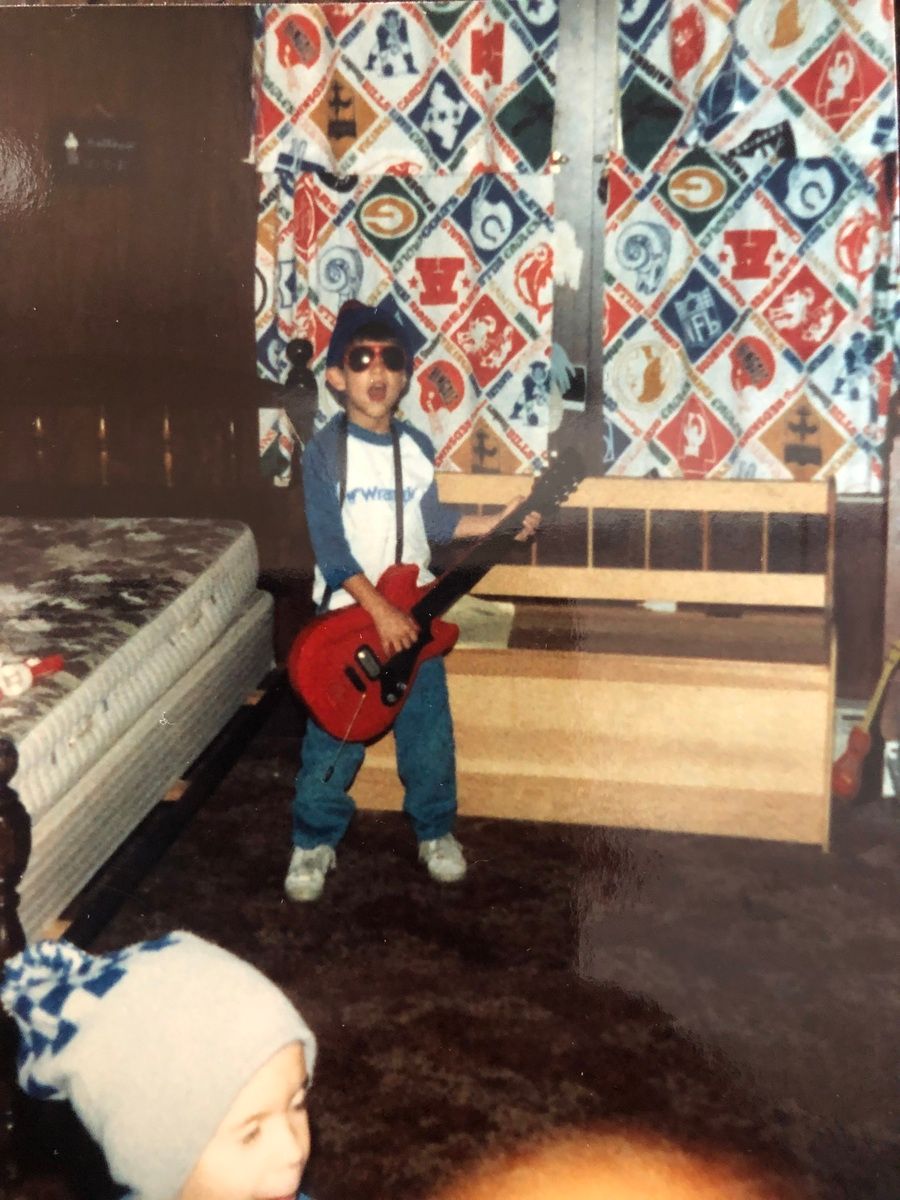
Some songs aren't written for the charts - they're written for the feeling of them, the way they sit in your memory, the specific people they make you think of. This one's been living rent-free in your (re: my) head since you (re: I) were (was) 10, and not because the lyrics are profound. It's because of the cassette case, the Walkman headphones, the casual name-drops in the verses that made their (re: your) friends feel seen. The band probably knew exactly what they were doing in the studio - the bass intro, the riff, the unexpected key change tucked in the part you forgot about. It wasn’t so much a song to change the world as it was a song to make your friends smile when they heard it live.
Quote from the Personal Archive - sometimes the things that stick aren't the ones designed to impress: "The song wasn't written for the charts. It was written for the bass intro to be awesome. It was written for the wah-na guitar riff flex."
Jesse Jackson's voice still carries weight, even now - maybe especially now. Two quotes, separated by decades but speaking to the same underdoggedness: one about reaching beyond your grasp and dreaming beyond your circumstances, another that's pure refusal: keep hope alive, keep hope alive, keep hope alive. He was flawed, complicated, generational in ways that don't age perfectly. But the core message endures. Seeds were planted. Ideas were executed. The stories live on. You can feel the weight of those words now, even if more hasn't been done since he spoke them. The well-trodden paths are still there behind you. His shoes put in serious mileage.
Quote from the Personal Archive - on refusing to surrender: "You must not surrender. You may or may not get there, but just know that you're qualified and you hold on and hold out. We must never surrender. Keep hope alive. Keep hope alive. Keep hope alive."
Here's the thing about practice: it's a status game you play with yourself first, and the world second. You practice because you're trying to be better than you were yesterday, not because anyone's watching. But then sometimes you perform - you get the external validation, the applause, the proof that it mattered. And then you get back in the woodshed. That's the cycle. That's the magnifying glass. (hint hint: upcoming Just Press Record on this topic that’s got me thinking extra about it)
Derek Sivers nailed it: mastery is the ultimate status because the rich can't buy it, the impatient can't rush it, the privileged can't inherit it. You can only earn it through the compulsion to work on something that has an internal game to it. And here's where it gets interesting - mastery bridges both worlds. It's the self-sustaining status game internally and the scarcity status game externally. When attention is everything, and focused attention produces mastery, and mastery is the most valuable goal you can pursue - what are you practicing? If it leads to knowing people like Mat and Kris who are thinking about this stuff too, then it's all worth it.
Quote from the Personal Archive - on what can't be taken: "Mastery is the best goal because the rich can't buy it, the impatient can't rush it, the privileged can't inherit it, and nobody can steal it. You can only earn it through hard work. Mastery is the ultimate status." - Derek Sivers
Angie built an entire consultancy on a radical premise: work should be fun, and the human touch is a competitive advantage. But what really matters is how she thinks about starting things. The Minimum Viable Promotion isn't a strategy - it's an antidote to paralysis. Skip the perfect plan - send the email. Build the plane while you're flying it. She wanted to drive bulldozers in the Vegas desert, so she asked people if they wanted to come. They said yes and sold out an event. The plan came later (some of it maybe a touch too far late, like the Airbnb, but live and learn!). The point is - the momentum came first.
But here's the deeper move: Angie's consulting process is about understanding the bigness of a person first - why they're doing this, who they want to help, where this comes from - before reducing that expansiveness into something the market can understand and value. It's an awareness that everyone will make you smaller anyway. The trick is understanding your full self before someone else decides which part of you they need. And she's learned this the hard way: she'll never be the reason someone gives up on themselves, because too many people in power used their influence to make her smaller. She chose to do the opposite. I love that.
Quote from the Personal Archive - on starting before you're ready: "I have this concept that I love called the Minimum Viable Promotion. What is the smallest thing I need to do to get this thing out there? Well, I'm gonna write an email and send it to a bunch of people... I built that plane while I was flying it." - Angie Colee
Everybody in your life is making you smaller, and that's not malice - it's survival. Your accountant needs you to be "the tax client." Your financial planner role needs to stay small. The podcast audience knows you as the host. And you're making them smaller too, out of necessity. There's too much life. There's too much everything. Making people smaller is how we all fit.
Where it matters most is - think of the best people in your life. Think about your spouse, your closest friends, the consultants who really get it - they see the bigness of you first. They understand how far-reaching your passions might lie. They see the weirdness and richness of your whole self. Then they help you reduce that into something useful for the world. Angie does this professionally. Your spouse does it in the kitchen before guests arrive, before she becomes "the person making sure the house is ready." The reduction is beautiful when it comes from someone who saw the expansion first.
Quote from the Personal Archive - on the people who see your whole self: "When Angie explains her consulting process, and how she's asking why, and who, and really digging in for the nuance, she's talking about understanding a bigger version of a person... It's an awareness of how small others will make you, that she steps back to see the big version of first, to steer that reduction."
Sports at their best are a community asset - the least important, most important thing. They're what you kvetch about at the bus stop, the bar, the barbershop. But when you price out tickets and access, you price out the experience that drives all the downstream value. Yes, it's psychological value. But it's psychological value you can't earn anywhere else. FIFA made quite the ridiculous exercise for the World Cup. They optimized for leverage and scarcity, not for the community that's supposed to matter most.
This is the extraction problem playing out in real time. Professional sports organizations stopped asking "how do we make this better for the fans?" a long time ago. Now they're asking "how do we extract maximum value?" And you're watching the difference play out in ticket prices, in accessibility, in whether the average person can afford to support their local team. The reminder here is worth paying attention to - if there's no home team you can afford to root for, maybe the answer isn't resignation. Maybe it's starting your own.
Quote from the Personal Archive - on what happens when you optimize for the wrong metric: "Sports, at their best, are a community asset. They're the least important, most important thing... And when you price out tickets and access, you price out the experience that drives all the downstream value."
Where Else I Showed Up This Week
This week I sat down with Matt Reustle on Excess Returns to talk about how AI is actually being used in investing - not the hype version, but the practical one. We went deep on deep research models, agentic AI, prompt engineering, and how professional investors can use these tools to increase productivity, improve decision-making, and reduce blind spots without losing their edge. The conversation moves from early LLMs (which were honestly a head fake for most investors, me included) through the inflection point with agents, and then into the real work - how to build your AI tech stack, standardize your prompt experimentation, and structure your workflows so the tools amplify your thinking rather than replace it.
The connective tissue between all of these posts actually feels pretty clean this week: we were talking about mastery through focused practice, about the Minimum Viable Promotion and building while you're flying, about being made smaller in service of something bigger. And this Reustle conversation is exactly that, too- it's about how investors use AI to become more focused, more efficient, more dangerous with their attention at the big and small scales of individual output. You're not trying to automate your thinking. You're trying to kill bad ideas faster, surface deal breakers early, and let the tools handle the repetitive monitoring so your brain stays sharp for the high-leverage decisions. Same principle as everything else this week: know what you're practicing, focus the magnifying glass, and let everything else serve that focus.
Personal Archive Prompts
What's the one email you've been putting off sending because you don't have all the details figured out yet - and what would happen if you sent it anyway?
Where in your life are you adding complexity - more plans, more tools, more steps - that's actually just filling space you could be living in?
THINK ABOUT THE PEOPLE YOU'VE INFLUENCED - formally or informally. Have you ever been the reason someone talked themselves out of something? And conversely, who in your life has played Angie's role for you?
When was the last time you felt the full weight of hope, the kind that Jesse Jackson was talking about? What made you feel it then - and what's keeping you from feeling it now?
What are you practicing right now that you'd be embarrassed to admit? (Because that's probably the thing worth doubling down on.)
If you had to make yourself smaller in one area of your life to make yourself bigger in another, where would you choose to shrink - and where would you want to expand?
WHO IN YOUR COMMUNITY IS BEING PRICED OUT? And what could you do - starting small - to make that thing accessible again?
As always, I did my part, now it's your turn to write some reflections in your own Personal Archive.
(then, be sure to let me know where you're keeping it, I'm in search of the others too)
ps. Claude helped me organize and synthesize these thoughts from the week's posts. If you are curious how I use AI, read this post: Did AI Do That: Personal Rules
